


When Furious premieres July 27 on Hulu, viewers will meet Emmy Rossum’s FBI agent Alice Black as she stalks a calculating serial killer, played by Lola Petticrew. Setting the show’s visual language is cinematographer Doug Emmett, who shot the Elizabeth Meriwether series (with Brian Kirk directing the first two episodes) with one goal in mind: to muck up the image as much as possible.
“Brian and I both love the idea of trying to make it feel a little bit more analog,” Emmett says. The two landed early on neo-noir. “My concept is something that has a little bit of some color and some grit to the image. So we’re not desaturated. We lean into colorful light sources and set decoration, but it’s still grounded, and it’s not overly theatrical either.” The touchstone was a gritty New York film of the 1970s or ’80s, and that ambition drove one of Emmett’s foundational choices: shooting anamorphic.
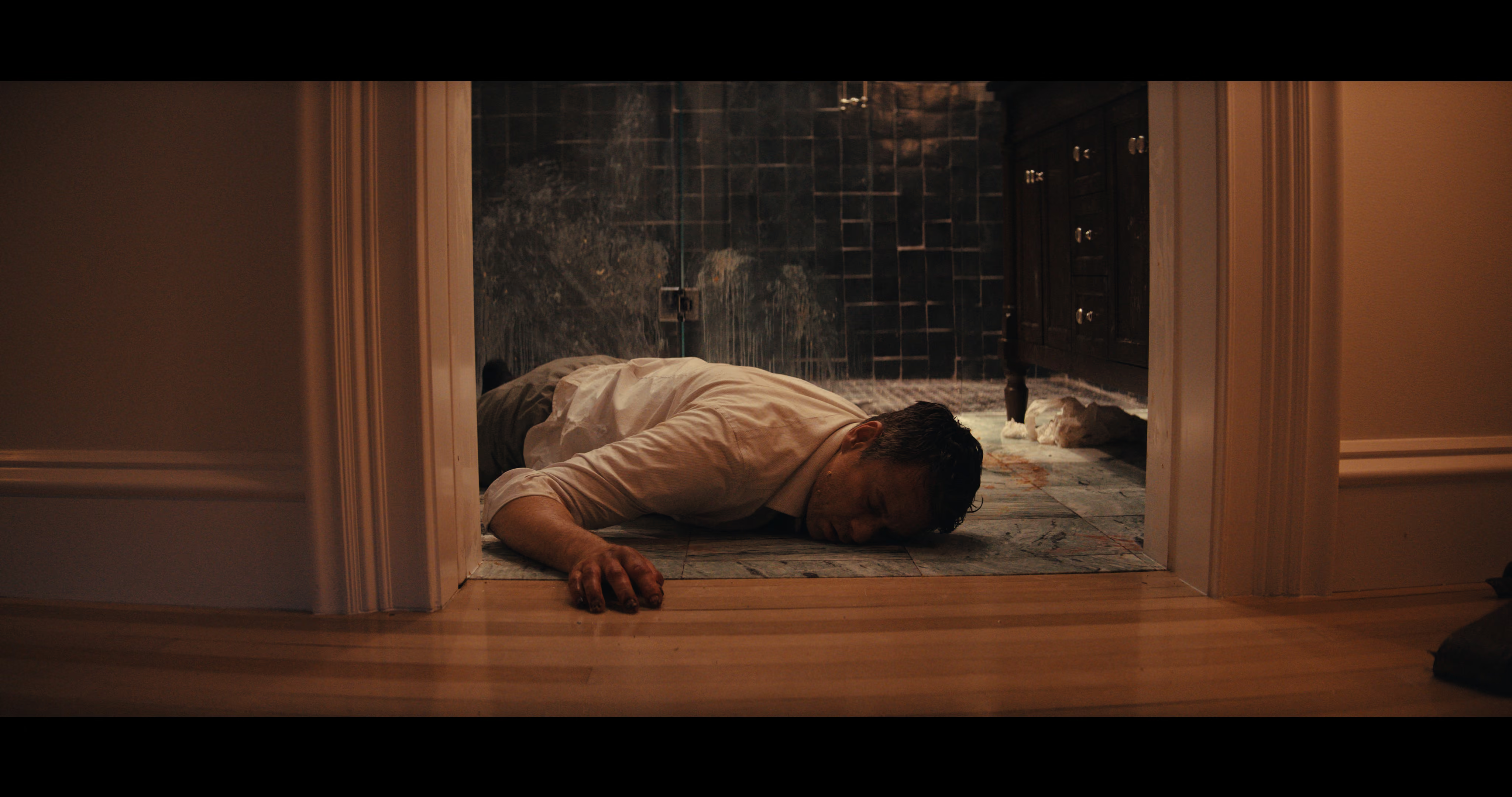
Shooting anamorphic for a gritty 1970s New York
Emmett paired the Sony Venice with Panavision’s T-Series anamorphics, leaning heavily on the 16mm and 40mm focal lengths. “Some of the wider focal lengths are really fun to use, especially if you’re in some of these smaller, tighter New York City apartments,” he says. “But also we had access to some really huge penthouse apartments and some really great locations. And so we found that using some of the wider focal lengths was just a bit more dramatic and fun.” Throughout, he let the actors and the characters lead the camera, keeping the blocking and camerawork grounded and motivated by performance.
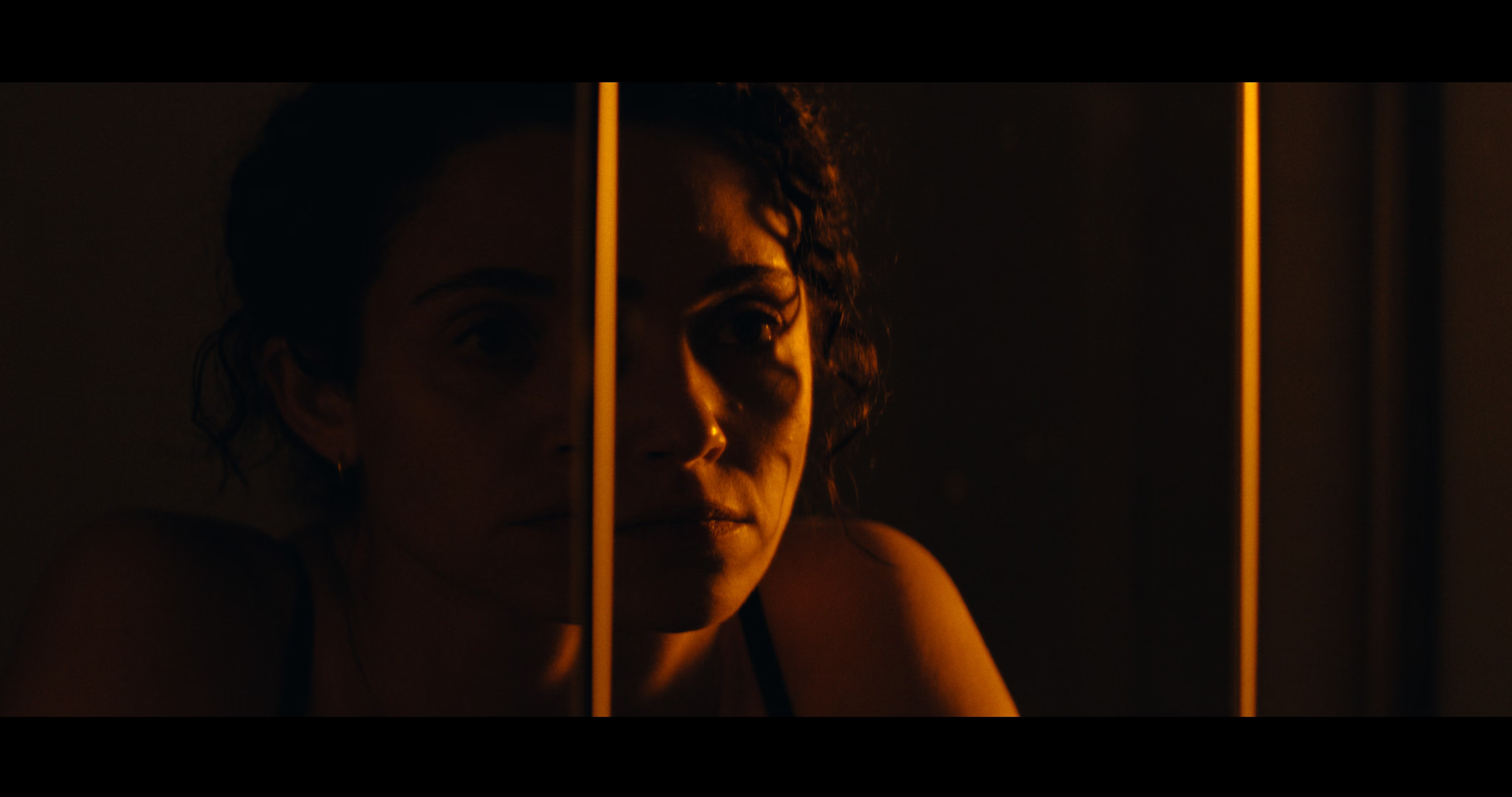
Using light to signal wealth and class
Rather than assigning separate looks to his two leads, Emmett kept one consistent grade across the series and did his character work through lighting, using it, as he puts it, to register how socioeconomics shape a space. Wealthy uptown penthouses were lit to feel warm, inviting, and sophisticated. In a downtown women’s shelter or a police station, he leaned on mixed color temperatures, a lot of fluorescence, and lights that don’t feel consistent: sources that look like they need to be replaced, some that flicker. “You establish a sense of place kind of immediately, just with the color and the style of the lighting,” he says.
.jpg)
Designing the LUTs with Senior Colorist Steven Bodner
To achieve the analog feel he and Kirk were chasing, Emmett built the look on FilmBox, using its film-stock emulation and grain, married to LUTs from Picture Shop supervising colorist Steven Bodner, a multiple-time HPA Award nominee for Outstanding Color Grading whose credits include The Marvelous Mrs. Maisel, The Queen’s Gambit, and True Detective. The approach came together in an unexpected way. Emmett had spotted the work of a young cinematographer named Jacob Hale on Instagram, shooting New York subway footage on a Sony FX3 through FilmBox. “There’s a younger crop of DPs out there finding they can manipulate their image to a far greater degree than I even knew was possible, and they’re doing it at home on their laptops,” he says. So he called Hale, learned his process, and invited him into the room at Picture Shop alongside Bodner.
Together the three designed three LUTs (low, medium, and high contrast) and settled on the medium. With no DIT on set, Emmett was, in his words, “hoping and praying the LUT would work right out of the box.” It did, without modification, which made the back end fast: he graded a full episode with Bodner in about four hours, arriving to find the colorist had already done substantial work in advance.
A first-time collaboration with Bodner
For Emmett, an NYU film student who once watched production trucks line the Lower East Side and dreamed of exactly this, the show was a full-circle moment: a fantastic crew, incredible equipment, and locations he never imagined having access to. But of everything he’s taking away from Furious, the partnership with Bodner, a first-time collaboration, is what he’s most eager to carry forward.
“Working with Steven Bodner was awesome,” Emmett says. “We hadn’t worked together before, and it was just a wild success. He had so many great ideas. He took our concept and totally ran with it. I look forward to working with him a lot in the future.”
“After speaking to Doug and looking at some test footage, Doug mentioned he wanted a filmic feel of the ’70s or ’80s,” Bodner says. “So with that knowledge, we utilized FilmBox and all its features. Doug allowed me to play with all the assets and come up with what I thought looked good. After messing around for a while with his shooting style and all the assets at my control, I believe we created a great-looking show. The show has a gritty, filmic, noir feel. A lot of colors and mood. I’m really proud of the look we created. Both Doug and Brian gave me great footage to play with. I’m really looking forward to collaborating again with these guys.”
With a second season already on his mind and a plan to evolve the look further, Emmett has found not just an aesthetic but a workflow he intends to keep. “That’s a process I want to apply from now on.”
Furious premiered July 27 on Hulu, with new episodes each Monday.