


Cinematographer Christian "Tico"Herrera, CCR and Picture Shop Senior Colorist Pankaj Bajpai on evolving the Snowfall look for FX's The Drop: A Snowfall Saga, and the three eras of episode 5.
A bridge from Snowfall
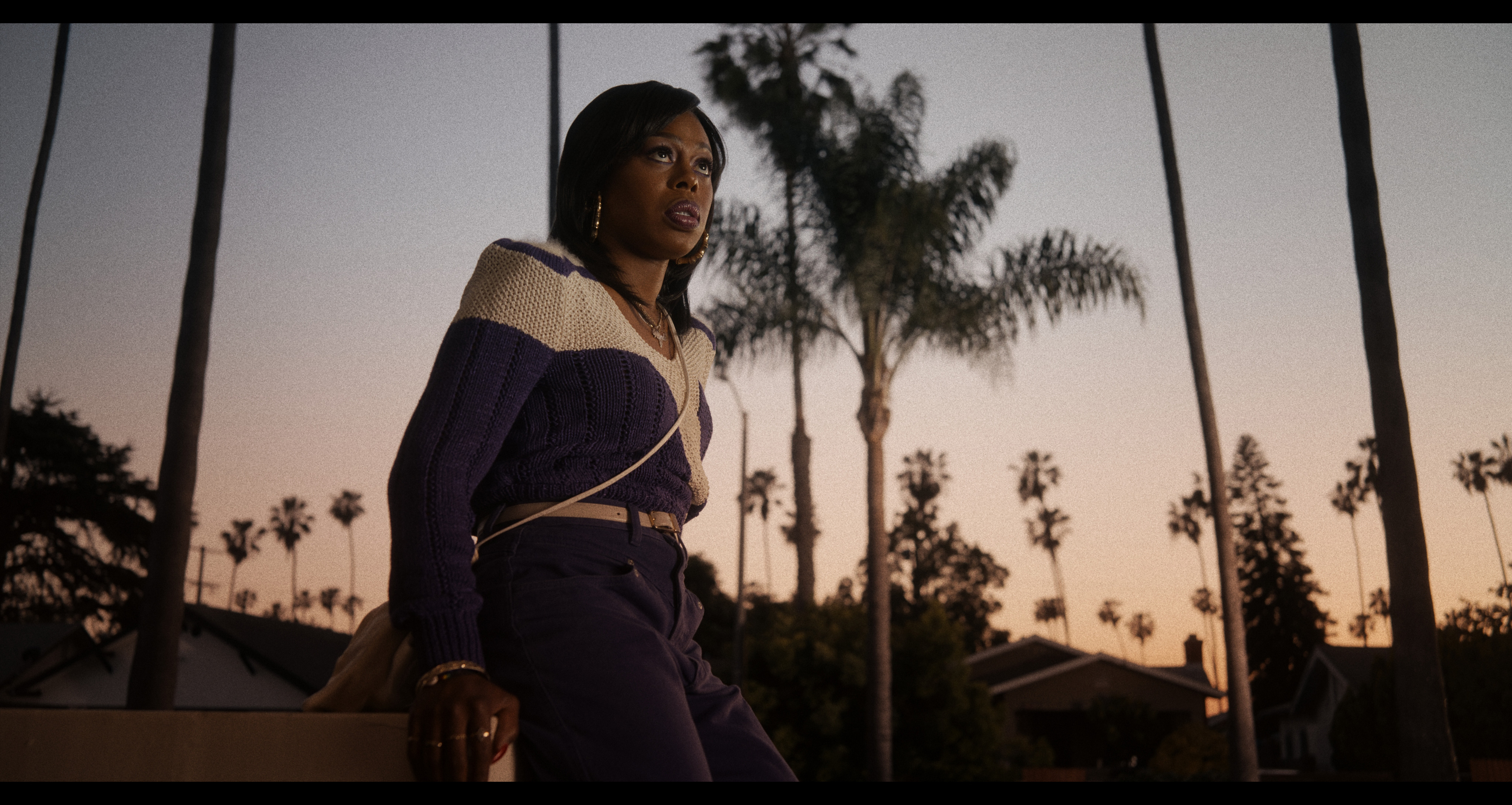
Set in the early 1990s South Central Los Angeles, shortly after the events of Snowfall, as crack money dries up and the West Coast hip hop scene begins to emerge, The Drop: A Snowfall Saga is the exciting follow-up series to Snowfall. Where Snowfall told the story of the crack epidemic in 1980s South Central Los Angeles, The Drop: A Snowfall Saga picks up with Wanda Bell and Leon Simmons in early-'90s LA, as West Coast rap rises from that fallout.
DP Christian "Tico" Herrera, CCR (Snowfall,Queen Sugar, Zombies 3) reassures viewers that the tone for this series is different. "This is going to be more upbeat. It will be more positive. It's not so much killing, not so much drug-related," Herrera says. "The money from the drugs on the street is paying for this music, so there's still some underground grittiness that comes from Snowfall. Yet the storyline of The Drop is very uplifting, very positive and colorful."
And critics have noticed the look. The Hollywood Reporter called the show "bright and flashy" at a time when so much TV is underlit and washed out. It tied that style to the aesthetic Snowfall co-creator John Singleton forged with Boyz n the Hood. Big Gold Belt wrote that "the cinematography alone makes The Drop a great watch," and that the series carries Singleton's spirit.
Herrera is a rising talent who knows this world well. Snowfall was his first series as a director of photography, and it earned him his first ASC Award nomination. He also brought some of the color and musical camera work from Zombies 3 to The Drop.
When he got the job, he made one call first. "The first person that I called was Pankaj," Herrera says. Picture Shop Senior Colorist Pankaj Bajpai graded all six seasons of Snowfall.
“We had a goal that The Drop didn’t have to look like Snowfall,” Bajpai says. “We wanted to see how the 10-year transition from the '80s to the '90s was going to play out in its own special way."
Herrera pitched the early episodes as a bridge. "We started with the first episodes to become more Snowfall-ish, and then as we advance, we start adding more to The Drop look," he says. "Of course, it has some blood from Snowfall. That DNA, definitely."
From gritty to full-on color
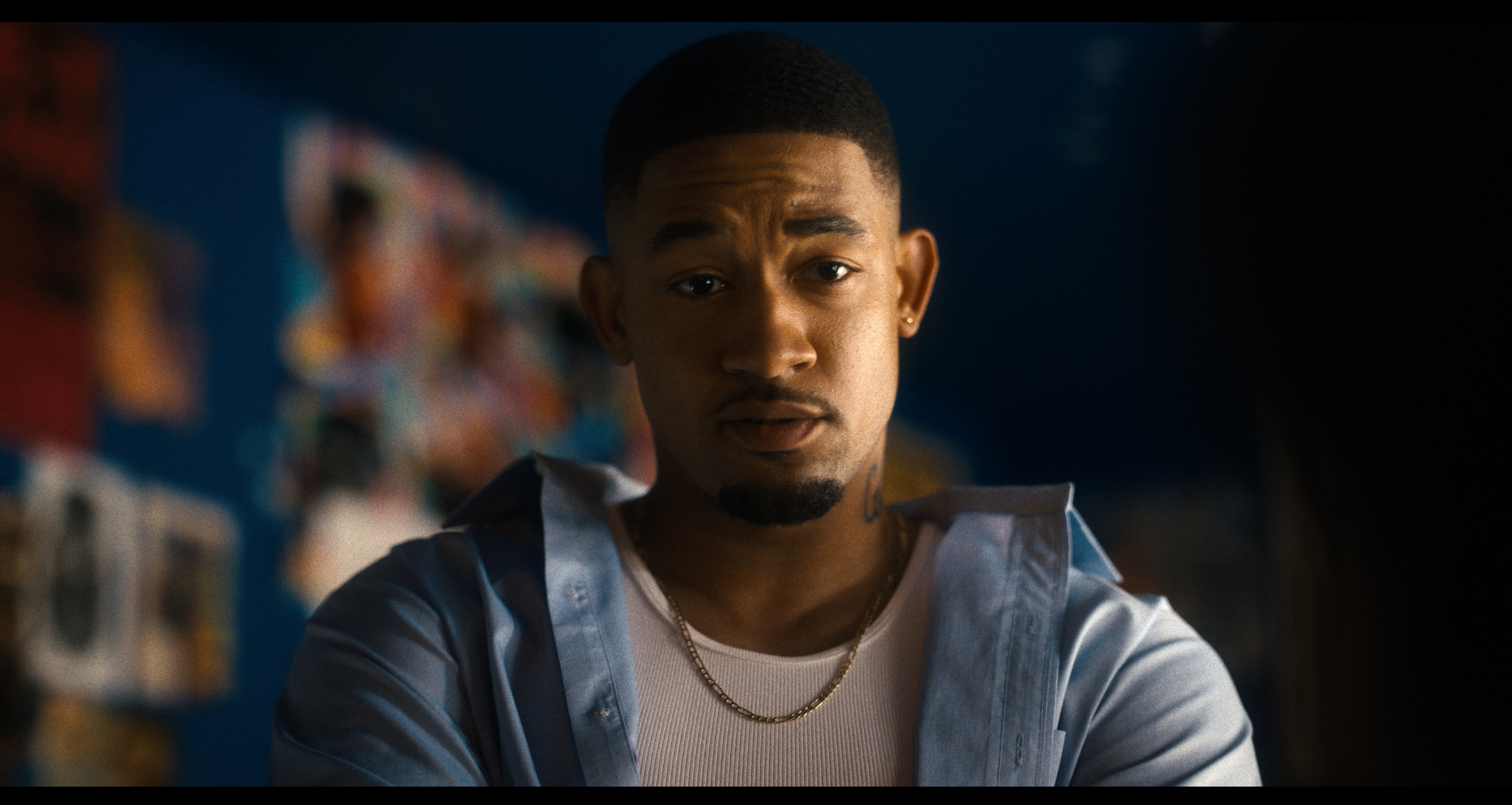
By the end of Snowfall, Herrera says the look was dark, very contrasty, a little muted and full of greens, with a lot of hard light. "On The Drop, we went to play with full-on colors," he says. "More musical, more attractive to the music fans." The light stayed strong, but it was diffused.
Spellman pointed the team to two films, City of God and Belly. Incidentally, Bajpai had worked on Belly years earlier. "I said to Tico, this is serendipity," he says. He screened both films for Herrera and the producers in his theater.
For additional inspiration, Bajpai went to an unusual place, specifically to vinyl album art from the era. "These album covers have a certain texture and feel to them," he says. "The photographs of the bands, the typeface, brilliant juxtapositions of primary colors with a graphic edge."
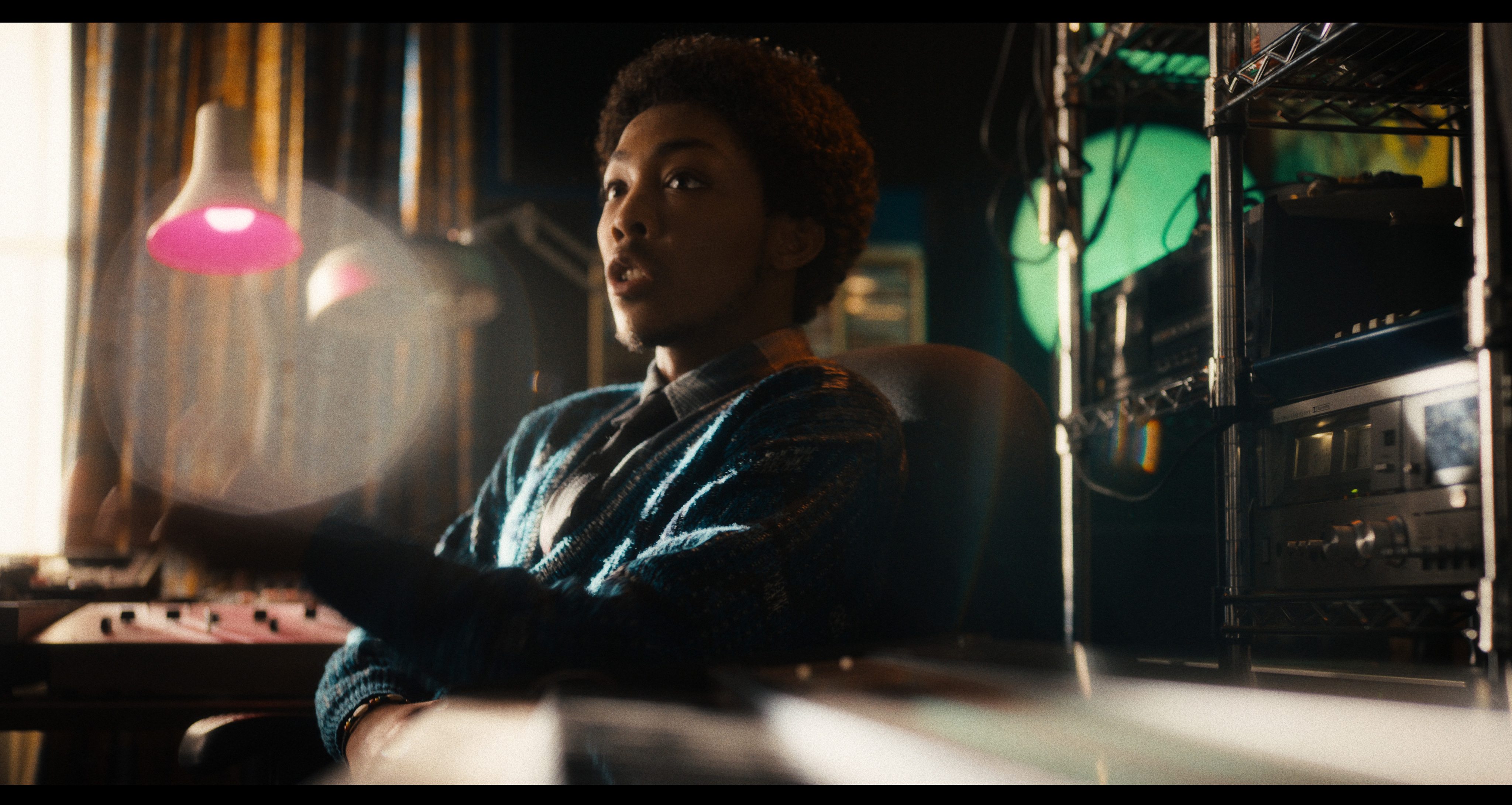
The two films map to the show's two worlds."We have the streets that Malcolm wanted to feel more real, more Cityof God," Herrera says. "And then there's the recording studio, which is The Drop, truly. That had the feeling of Belly, which is very colorful and more artistic. This is the inspiration room. We can play with colors, we can play with lights and flares."
The look kept growing as the season went on."We created a lookup table at first," Herrera says. "Then as we started understanding the show and the story better, we took it another notch in a different direction. And we just kept it evolving."
Episode 5, three eras in one hour
Herrera shot four of the series episodes, including episode 5, while DPs Xiaolong Liu and Luc Montpellier shot the remaining four episodes.
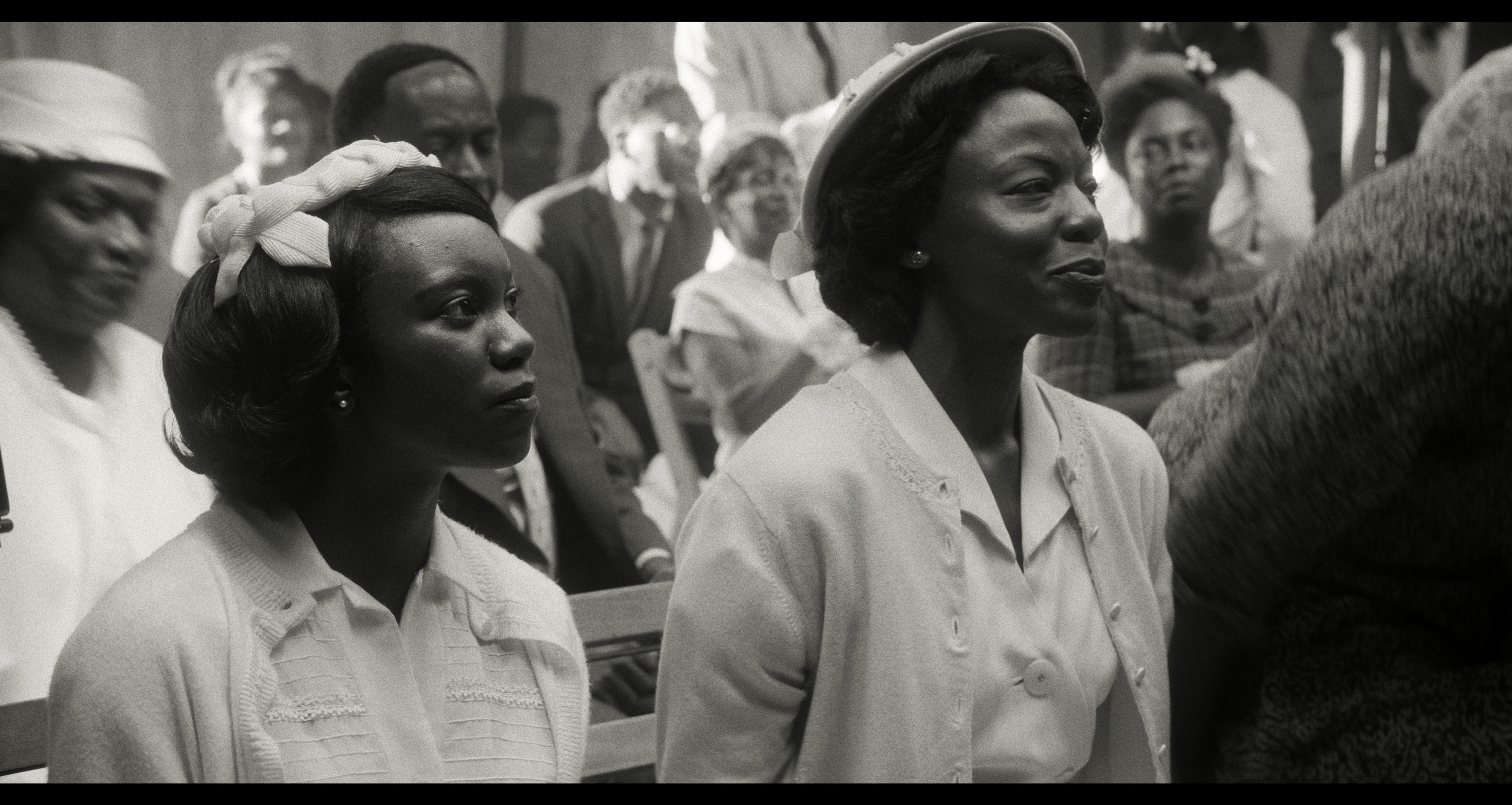
Both Herrera and Bajpai name episode 5, "Homecoming," as their favorite. Directed by Darren Grant, it moves through three periods of one family's story: the '50s, the '70s and the '90s with three distinct looks, and this is where the partnership between the DP and colorist truly shines. "We really went there to make those periods just pop," Bajpai says. "They're distinct, but they're still part of the one whole."
Each look follows a different generation of the same family. The '50s belong to Gerty's youth in the church, the '70s to her daughter Rochelle's music career, and the '90s to Lamar, who is chasing his own music dream. The color tells the audience where they are in time and how each era felt. "It was totally story driven, for sure," Herrera says. "How do you emotionally add the audience into this storyline?"
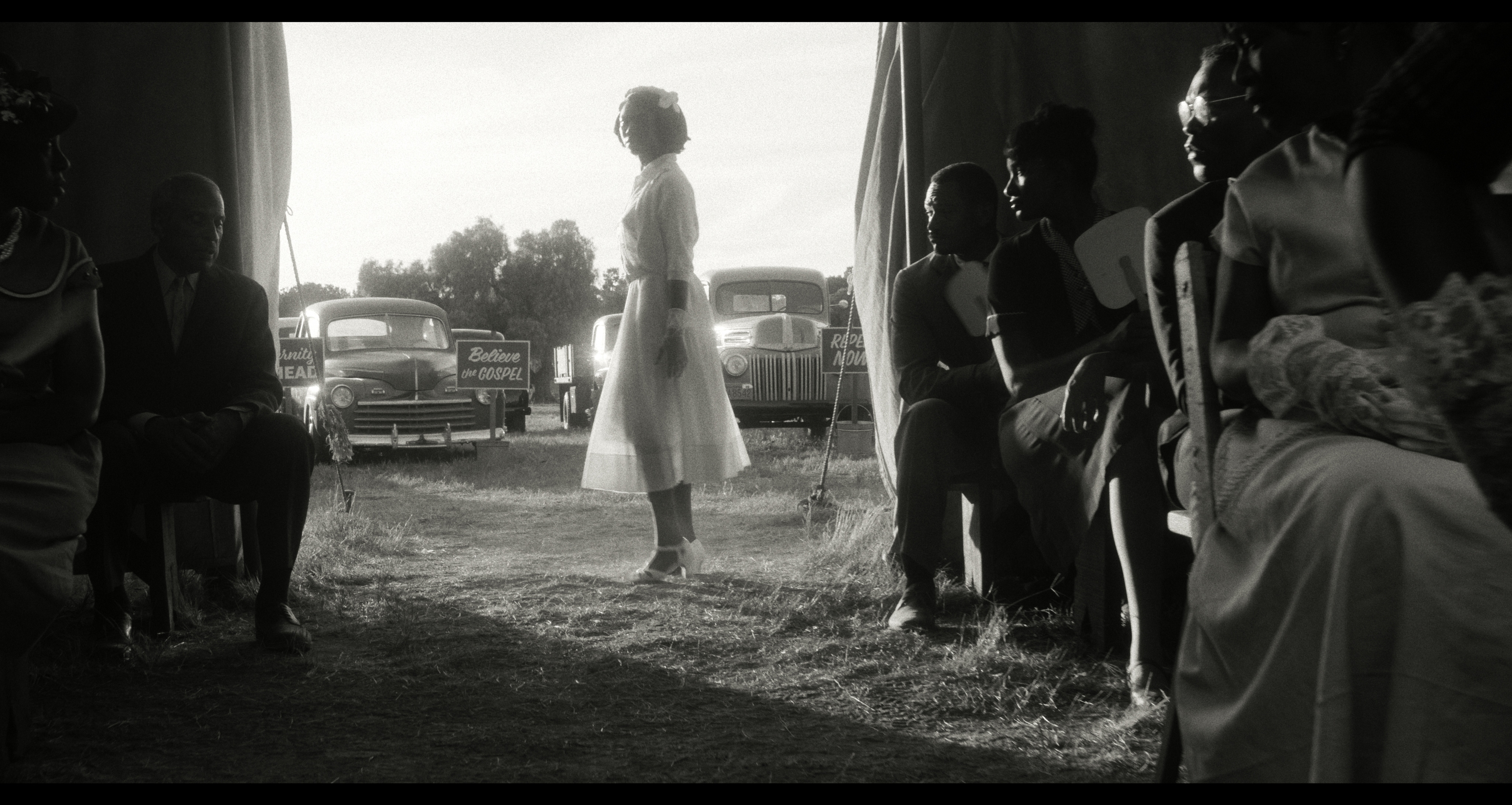
The episode opens in black and white, inside a 1950s church revival, a nod to the lack of color TV in many people's homes at the time, says Herrera. "In the 1950s, color broadcasting in Los Angeles was not there yet," he says. "That gave me a lot of strength to sell this to the director, Darren, the show runner Malcom Spellman and the studio. But it was not just black and white to make it black and white." He lit it with hard light, the way Fresnels lit that era.
Bajpai had previously graded both the black-and-white and color versions of Spider-Noir. He says “The Drop” though was a very different job. “It was really about carrying you away and making you feel like you were right in the middle of a Sunday service inside a tent,” he says. “It’s so rewarding to see the beautiful range of Black skin tones come alive in black-and-white imagery.” To make that happen, Bajpai used film emulation of 1950s monochrome stocks and shared camera “look” files with Tico so he could light and compose accordingly.
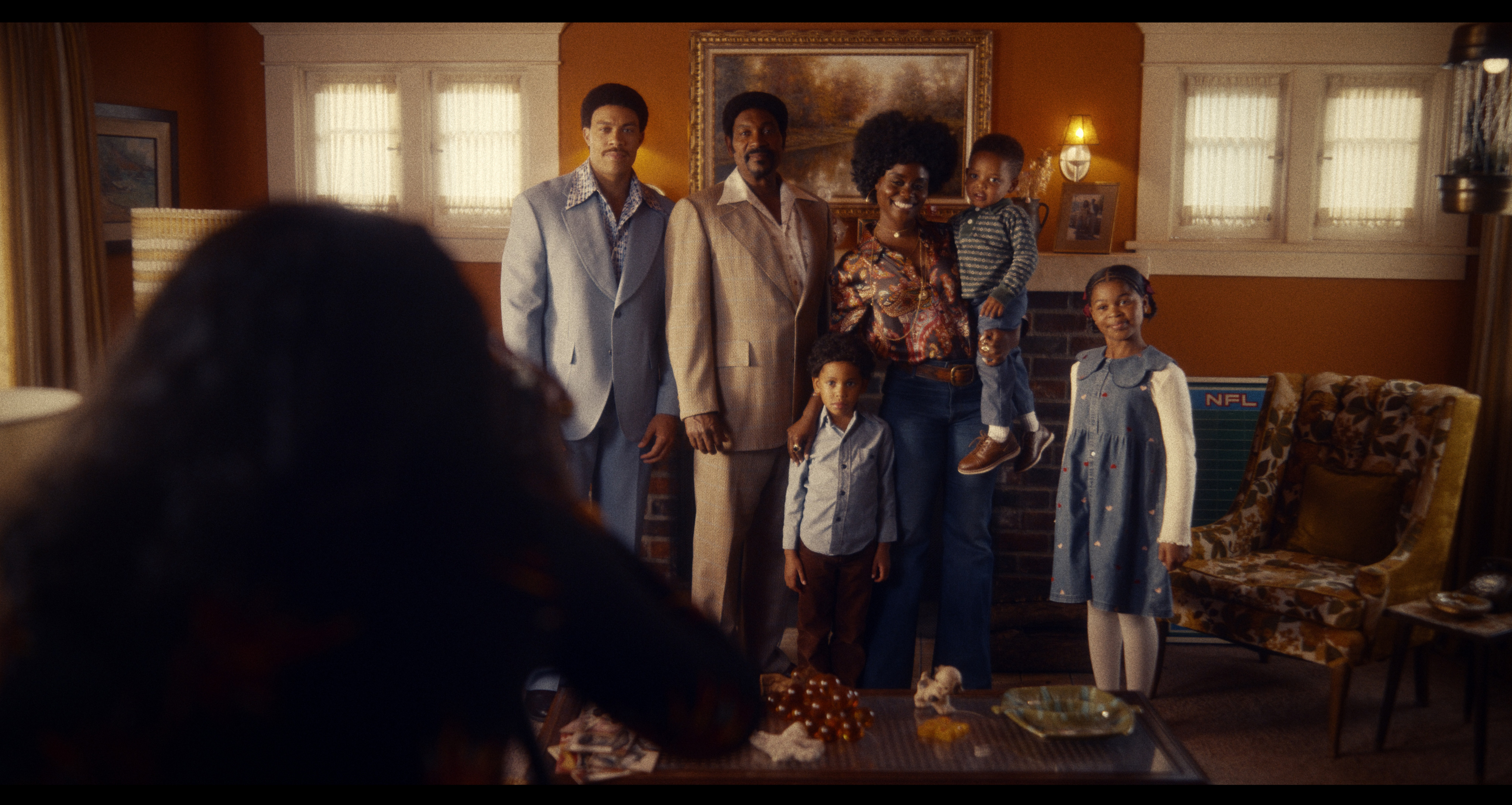
For the '70s, the inspiration was aged Polaroid. Herrera used softer beauty lighting and heavier diffusion, including a gold glow filter, so the period feels "all beautiful, glowing, goldish."
Bajpai built on that with creative halation and color cross talk resembling characteristics of film from that period. "When light hits the film, the back of the film reflects back into the emulsion," he says. "Tico was pushing it with the gold hue. I just put the pedal to the metal."
The '90s return to the album art idea, with saturated color and patina. Bajpai credits Herrera's bold use of red, yellow, green and blue light. "It wasn't anything specific mathematically for these film stocks," he says. "It was just how emotionally we respond to those images."
Jump out of the plane
Three looks in one episode was a risk, and the studio had to buy in. Herrera and Bajpai have a motto for moments like this.
"Tico, you jump out of the plane, and I'll catch you, Bajpai says.
"Tico's work is fearless," he adds. "I want him to get really adventurous, so from that we can create something very unique. Go get into trouble, because we'll come out with something wonderful."
Herrera sees the same thing from the other side. "When I do something with filters and he sees it, then he adds to it," he says. "That's where we feed each other's vision."
For Bajpai, the key is to never decide early that an idea won't work. "You never know until you've really gone the full distance," he says. "From that, you can always back off. But if you don't go the distance, you'll never know."
Herrera puts it simply. "This is definitely my best work."
The Drop: A Snowfall Saga is now streaming on Hulu