


Originally published on British Cinematographer
Two Worlds, One Grade
We chat to this year’s FilmLight Colour Awards Episodic winner, Peter Doyle, about grading two perspectives, each with two timelines, alongside two legendary cinematographers.
The winners of the 2025 FilmLight Colour Awards were announced during EnergaCAMERIMAGE in Toruń in November, where Peter Doyle was awarded this year’s Episodic winner for his work on Disclaimer – a project which saw him collaborate with two legendary cinematographers, Emmanuel Lubezki ASC AMC (‘Chivo’) and Bruno Delbonnel ASC.
“I chose to submit Disclaimer as the initial brief was a dichotomy,” says Doyle, who is senior colourist at Picture Shop. “On one hand, the technical brief was to help build an extremely precise color pipeline. On the other hand, the creative brief was descriptive rather than prescriptive, and open to interpretation.”
“Technically the challenge was to represent truly and accurately the colours of production and costume design. Creatively we had to interpret those colours and tone scale to create two POVs with two time periods inside each of those POVs.”
“To be working with Bruno and Chivo was just fantastic,” adds Doyle. “To venerate their light and to combine it into an overall film was a privilege.”
The cinematographer duo sent their congratulations to Doyle during the FilmLight Colour Awards ceremony at EnergaCAMERIMAGE.
“Congratulations, Peter — this is very well deserved,” commented Lubezki. “It was a fantastic collaboration and you are not only an incredible colourist, but a great artist and a real collaborator.”
Creating a consistency across two worlds
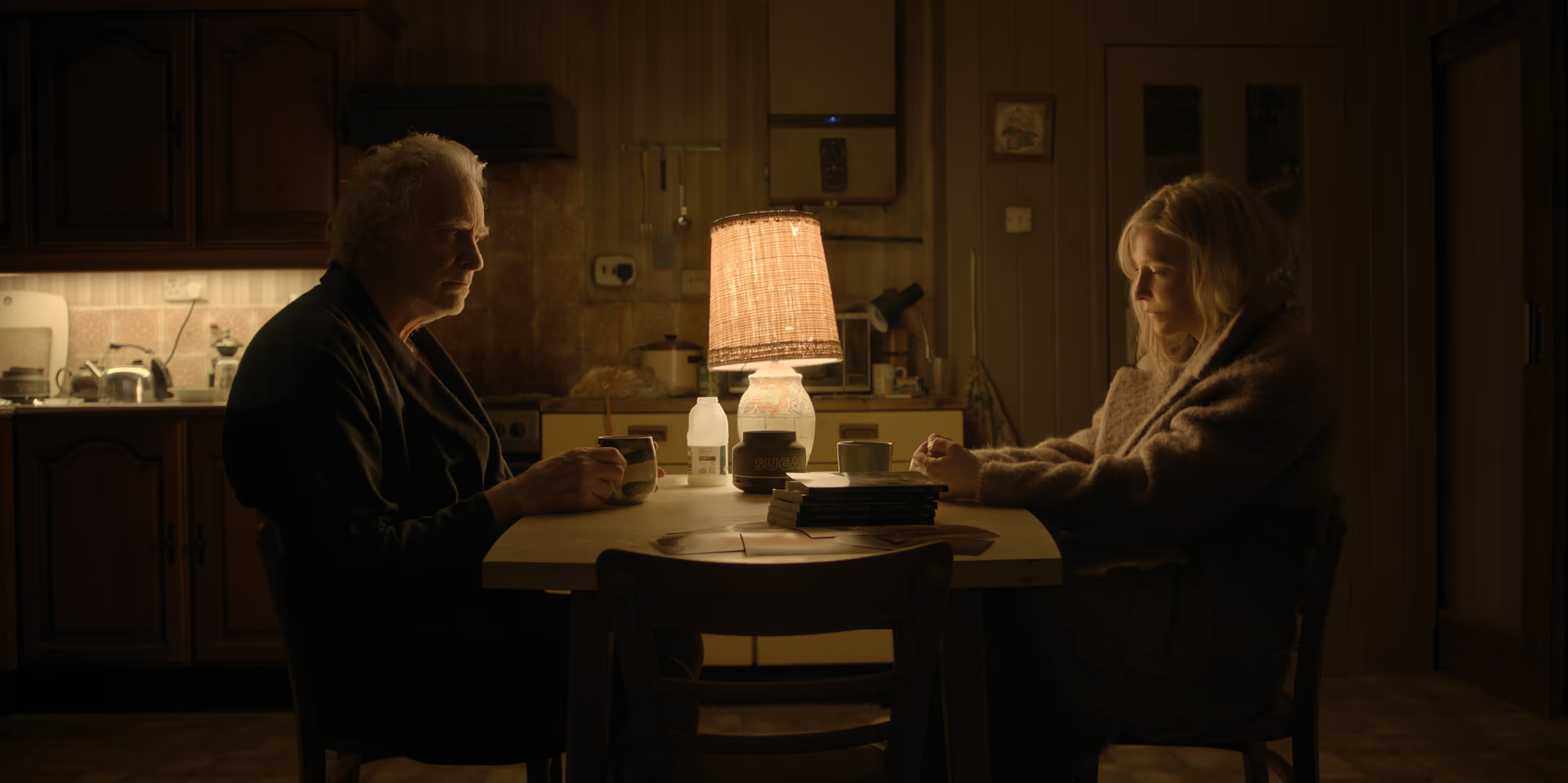
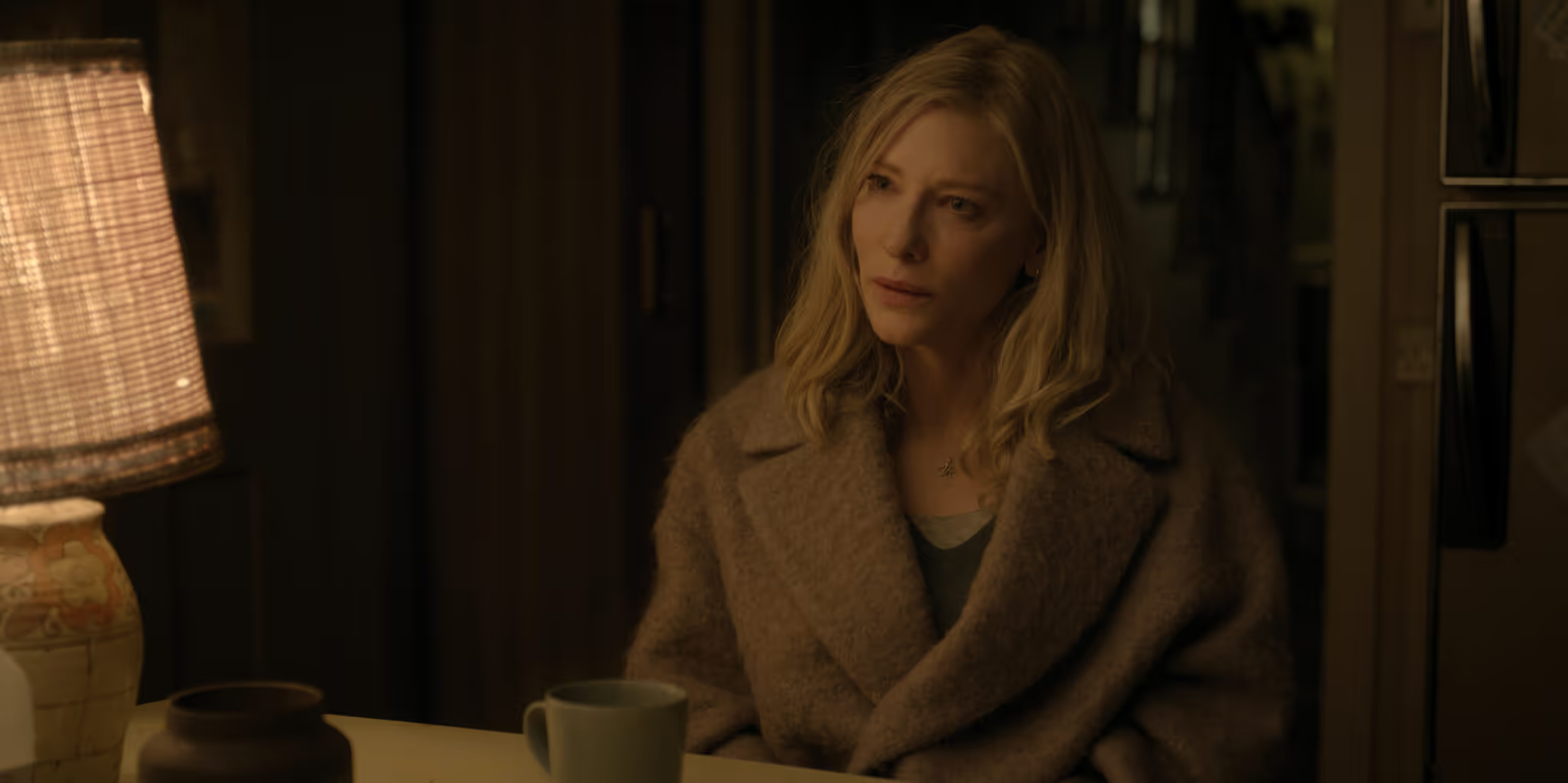
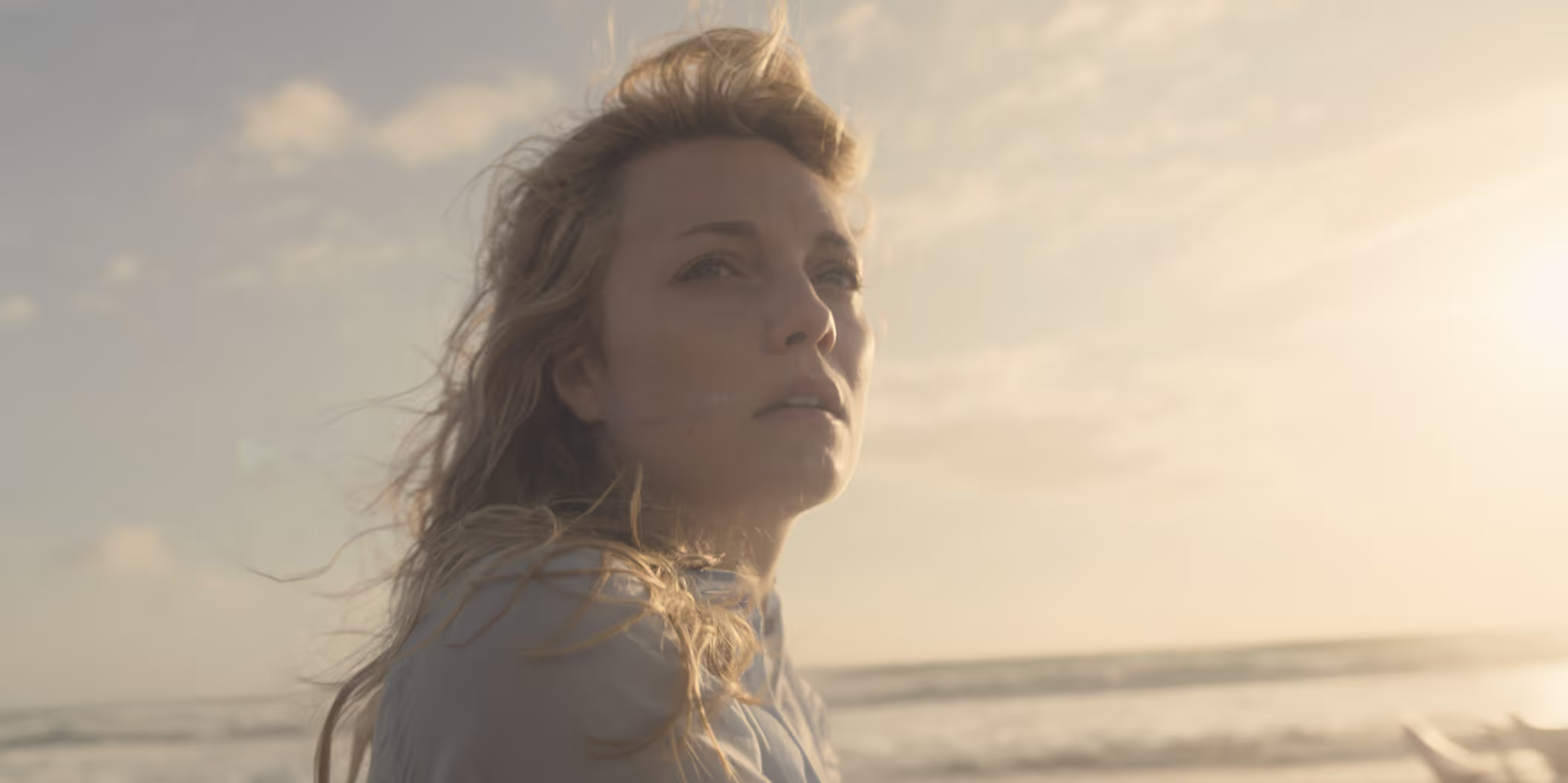
Each character’s story — Stephan’s and Catherine’s — was considered standalone, and there was an agreement that each DP would not see the other’s work. “Bruno shot Stephan’s story and Chivo shot Catherine’s story,” says Doyle.
“On Disclaimer, he was amazing because he was in the middle of Chivo, me and director Alfonso [Cuarón],” says Delbonnel. “I didn’t see what Chivo was doing and he didn’t see what I was doing. In fact, I started grading before Chivo and Peter was very careful not to show me what he did on set. The only judge was Alfonso, in some ways. The two of them were controlling the consistency of both worlds.”
“He knew how to deal with the three of us and kept our ideas together,” adds Lubezki. “It was Peter who kept us, I cannot say consistent, but the movie had a language and they were responsible for that.”
“It’s a different consistency, which is a very strange concept,” adds Delbonnel. “But Peter and Alfonso were able to find the language of both of our work, specific to this project, and I really admire both of them for that. Peter knew and would say ‘we shouldn’t go in that direction,’ without explaining everything — because he had a plan.”
“The guiding philosophy was that Catherine’s world was elegant and posh, while Stephan’s was a little more suburban and a little rundown,” explains Doyle. “Overall, Alfonso wanted a sharp, visceral look with a clear delineation between past and present.”
“My approach to grading is always about understanding what the DoP is trying to achieve with their light, what the director is striving for with the tone of the performance, and what the production design has created,” says Doyle. “My input is to interpret, respond with my best efforts at a true and accurate representation of what was on set, and then offer interpretations.”
Finding the vision
“Working with Alfonso, Chivo, and Bruno was really about defining the end goal together and then working backwards from there,” says Doyle. “Once that vision was clear, they could make very specific choices about cameras, lenses, lighting packages, and how the production design and costumes would live within that world.”
“We got these ARRI cameras when they were not even finished ,” adds Lubezki. “And it was very important to have Peter there to help us with all the testing and LUT creation. He’s a colour scientist and a mega geek and he understands things we don’t, so he was crucial to the project.”
We built a pipeline and a set of tools that allowed everyone to work freely, while still arriving at a unified final delivery,” adds Doyle. “One of the biggest challenges was embracing a new camera system, as well as shaping a look that would hold together not just creatively, but technically – for HDR and the streaming environment.”
A lasting collaboration
Introduced to Peter Doyle on this project by Delbonnel, Lubezki is set to continue collaborating with him beyond this film.
“It was a fantastic collaboration,” says Lubezki. “I loved working with Peter so much that I’m working with him again right now. He is so dedicated and passionate about his work.”
“I’ve worked with him on 15 movies now,” adds Delbonnel. “Each time he pushes the envelope and he always tries to understand what I’m trying to do. Sometimes he’ll say, ‘I don’t understand what you’re looking for exactly, but let’s try this’. Congratulations, Peter – you’ve helped me so much on every movie I’ve done.”